Irish Traditional Music Instruments: A Listener's Guide
- Start by finding the melody, not naming every instrument
- Hear the fiddle by its bow and changing edge
- Separate flute breath from whistle clarity
- Recognize uilleann pipes by the continuous system
- Tell accordion from concertina by shape, then by phrasing
- Hear plucked melody instruments by the front of the note
- Place guitar, bouzouki, and harp without demoting them
- Understand what the bodhrán is doing, and what it is not required to do
- Remember that the voice belongs in the instrument picture
- Use a three-pass listening exercise
Start by finding the melody, not naming every instrument
The core instruments of Irish traditional music include fiddle, wooden flute, tin whistle, uilleann pipes, button accordion, concertina, and tenor banjo. Bodhrán, guitar, bouzouki, harp, piano, mandolin, and other instruments may add rhythm, harmony, or another melody voice. There is no required session lineup, and local practice matters more than a definitive-looking list.
For a listener, the useful first question is not "What brand of accordion is that?" It is "Which sound is carrying the tune right now?" Irish dance music is strongly melody-led. Several players may state the same tune at once, each shaping it through articulation, ornament, phrasing, and tone. Accompaniment can support that movement, but it does not automatically become the center of the music because it owns the lowest note in the room.
The Irish Traditional Music Archive's instrument index is a good place to see and hear the range. Comhaltas Ceoltóirí Éireann's session overview names fiddle, flute, button accordion, banjo, and concertina among common session instruments, while also noting that lineups range from whistle and uilleann pipes to less frequent harp appearances.
Hear the fiddle by its bow and changing edge
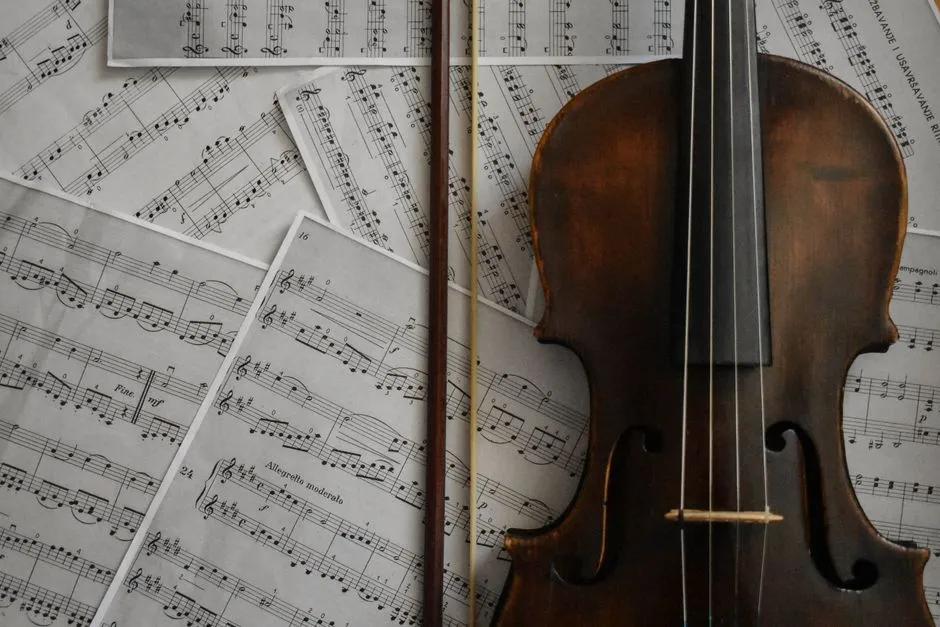
The fiddle is physically the violin; "fiddle" names the instrument in its musical setting and practice rather than a separate construction. The ITMA instrument vocabulary connects the terms directly and gives fidil as the Irish-language term.
Listen for a bowed string sound that can sustain a note, connect several notes in one stroke, or give each note a crisp new edge. A fiddler can make one phrase sound smooth and the next sharply articulated without the instrument leaving the melody. Double stops and open strings may add a second pitch or resonant weight, but not every player uses them in the same way.
The clue is not simply "bright strings." A plucked banjo can be brighter. Follow the attack: fiddle notes can swell, lean, slide, or continue beneath a change of bow pressure. In a mixed group, watch for the instrument under the chin and then close your eyes. The visual identification is easy; learning its voice takes the second pass.
Separate flute breath from whistle clarity
The wooden transverse flute and tin whistle are both wind instruments, but they enter the ear differently.
The flute is held sideways. Its tone often carries audible air and a broad, woody center, though instruments and players vary considerably. Phrases naturally reveal breath, articulation, and changes of pressure. A flute can sound strong without sounding polished into an orchestral sheen.
The tin whistle is held forward and uses a built-in fipple, the mouthpiece that directs air across an edge. It commonly gives a clearer, narrower attack and can sit high in an ensemble texture. A low whistle belongs to the same listening family but speaks in a lower register and can be visually much larger.
Do not treat "breathy" and "pure" as rankings. They are listening handles. Compare one solo flute recording and one solo whistle recording in the ITMA collections, then return to an ensemble track and follow only the moments where each player breathes. The silence between phrases often identifies the instrument before the note does.
Recognize uilleann pipes by the continuous system
Uilleann pipes are the Irish form of bagpipes, played with a bellows rather than by blowing through a mouthpiece. The melody is played on a chanter. A full set may also include drones, which sustain supporting pitches, and regulators, whose keyed notes can supply rhythmic or harmonic accompaniment.
Na Píobairí Uilleann's detailed instrument guide identifies the five main components as chanter, bag, bellows, drones, and regulators. It also explains that the chanter can be played open or closed against the knee, giving the player different articulation possibilities.
For the listener, start with continuity. The air reservoir allows sound to carry across places where a flute or whistle player would need a breath. Then listen beneath the melody for a stable drone. Finally, notice whether short chordal sounds answer or press against the pulse; those may be the regulators rather than a separate accompanist.
Not every piper plays a full set at every stage, and not every recording brings each component forward. Identify what you can actually hear, not the complete instrument shown in a diagram.
Tell accordion from concertina by shape, then by phrasing
Button accordions and concertinas both use bellows to move air across reeds. Their sound can therefore share a bright, reedy directness. The visual distinction is quicker: an accordion has a larger box with button keyboards at the sides, while a concertina is smaller and held between the hands.
Once the screen is off, listen for the bellows. Notes may arrive in compact, articulated groups, with changes in pressure giving a phrase lift and emphasis. The exact pitch layout and response depend on the instrument system and how it is played, so a beginner should not try to identify every box from tone alone.
The difference worth hearing is between two players, not two stereotypes. Choose an archived solo example clearly catalogued as accordion and one as concertina. Listen once for tone, again for articulation, and a third time for where each player shapes the larger phrase. The archive label can do the naming while your ear does the useful work.
Hear plucked melody instruments by the front of the note
The tenor banjo has a sharply defined plucked attack and relatively quick decay. In dance tunes, that clean beginning can make a stream of notes feel particularly outlined. A mandolin also uses plucked strings, but its smaller body and paired courses produce a different color. Players can soften, sustain, or ornament both, so "banjo is loud, mandolin is small" is not an identification method; it is an argument waiting to lose to a microphone.
Listen to the very first fraction of each note. A bow can keep feeding energy into a fiddle string. A breath can shape the center of a flute note. A pick gives banjo or mandolin a distinct front edge, after which the sound decays unless another stroke follows.
When several melody instruments play in unison, try following attacks rather than pitches. The tune is shared; the envelopes of the notes reveal the speakers.
Place guitar, bouzouki, and harp without demoting them
Guitar and Irish bouzouki often provide chordal, rhythmic, or contrapuntal support, but their role is not fixed. They can outline harmony, add bass movement, answer the melody, or carry a tune themselves. The bouzouki generally has paired string courses and a long neck; its tunings and techniques differ among players.
The harp can play melody, accompaniment, or both. It has a far older and more complex place in Irish musical history than a decorative shorthand can hold. In a session, however, it may be less common than fiddle, flute, or accordion. That says something about the gathering's practical lineup, not about the instrument's cultural importance.
Listen for function before instrument family. If plucked strings are changing under the tune, follow the bass movement and chord rhythm. If they state the melody, move them into your mental melody group. The instrument does not owe the listener one permanent job description.
Understand what the bodhrán is doing, and what it is not required to do
The bodhrán is a single-headed frame drum, commonly struck with a small stick usually called a tipper. The player's other hand can work against the back of the skin to alter tone and pitch. The National Museum of Ireland's bodhrán collection page describes a nineteenth-century example and its construction and playing method.
Its presence is not compulsory. ITMA's survey of percussion in Irish music notes that melody has a prominent role and that percussion was historically less usual than in many other traditions, even though the bodhrán is now common and its techniques have developed substantially.
When it is played well, listen for how it follows the tune's lift and phrase rather than laying an identical beat across everything. The drum can change texture, pressure, and emphasis. It should not be used as the only clue that the music is Irish, and listeners need not provide backup percussion on the table.
Remember that the voice belongs in the instrument picture
Irish traditional music includes song as well as instrumental dance tunes. An unaccompanied singer may become the whole sound world of the room. Lilting, or portaireacht, uses the voice to articulate tune rhythms and melodies with syllables rather than lyrics; ITMA includes both singer and lilting in its core instrument vocabulary.
That is a useful correction to a gear-shaped question. A tradition is not defined only by objects that fit in cases. Voice, language, repertoire, dance, place, and social practice all matter.
At a live session, give songs and solo moments the quiet the room asks for. Our listener's session guide explains how to follow those cues without assuming every gathering uses the same customs.
Use a three-pass listening exercise
Pick one authorized recording whose musicians and instruments are clearly credited. Then listen three times.
Pass one: role. Identify the melody carrier or carriers, the accompaniment, and any percussion. Do not name the instruments yet.
Pass two: sound source. Listen for bow, breath, reed and bellows, plucked string, drum skin, or voice. Concentrate on how each note begins and ends.
Pass three: phrase. Follow one instrument through a complete tune. Notice where it breathes, bows, pushes the bellows, varies the melody, or changes its support.
Use recordings from musicians' official releases, authorized channels, or an archive whose terms support your intended use. Do not extract or repost audio simply because it is useful for practice.
Afterward, test the same exercise on a jig and a reel. The jig-versus-reel guide helps separate tune type from instrumentation: any of these melody instruments can play either, and no single timbre turns a tune into a jig.
The point is not to pass an imaginary pub quiz. It is to hear more of what each musician is contributing. Once that happens, the names stop being labels on a display case and start becoming routes through the music.